Ketamine Assisted Psychotherapy (KAP) in Denver
Rapid, effective, and compassionate care in a safe clinic.
~ Rapid relief in hours to days.
~ Safe with no known long-term side effects and minimal
short-term side effects.
~ 83% success rate for treatment-resistant cases.
~ Administered by a skilled medical team in a safe setting.

Why Consider Ketamine Therapy?

Ketamine Infusion Therapy offers powerful, fast-acting relief for depression, anxiety, PTSD, and more. It’s a proven, individualized approach that offers new hope when other treatments haven’t worked. This isn’t just a treatment, but a journey towards a healthier, happier you.
~ Safe with no known long-term side effects.
~ Effective even for treatment-resistant cases.
~ Supports profound transformations for the brain and the mind.
How Does Ketamine Treatment Work?
Ketamine treatment supports healing in two ways: through direct brain chemistry and transformative experiences. These two essential, interrelated components are called the experiential and the neurochemical.
Experiential Effects
During your session, ketamine can create a gentle, dreamlike state that many people find deeply calming, introspective, or even spiritual. This experience can help quiet racing thoughts, loosen rigid negative patterns, and open up space for new, healthier perspectives.
Many patients notice their mood, behavior, and outlook begin to shift even while they're still in the infusion room, and these positive changes often last well beyond the treatment itself.
Neurochemical Effects
One important mechanism is boosting levels of brain-derived neurotrophic factor (BDNF), which promotes growth in the prefrontal cortex, helps repair damaged cells, and facilitates the creation of new connections between neurons. This neuroplasticity supports lasting improvements in mood and function.
Ketamine is an NMDA receptor antagonist that increases the production of the neurotransmitter glutamate and stimulates AMPA receptors. Glutamate is a crucial neurotransmitter involved in mood regulation, and imbalances can result in depression, anxiety, PTSD, and other mood disorders. By restoring healthy glutamate signaling, ketamine helps rebalance brain chemistry when traditional treatments have been ineffective.
Your care path
-
You’ll work with our on-staff therapist for KAP preparation and integration. If your insurance does not match our therapist, we will help you find a therapist who can support your care.
-
Yuko Blue, FNP reviews your medical and psychiatric history, confirms whether KAP is appropriate, and outlines a personalized medical plan.
-
Before dosing, preparation helps you feel safe, set intentions, and learn grounding tools for the session.
-
Dosing happens in a calm, monitored set and setting. You remain supported throughout; plan for rest afterward and a safe ride home if needed.
-
After dosing, therapy helps you make sense of what emerged and carry insights into daily life. NSPI / integration support may be part of your package.
-
Yuko Blue, FNP follows your progress, safety, and whether the plan should be adjusted.
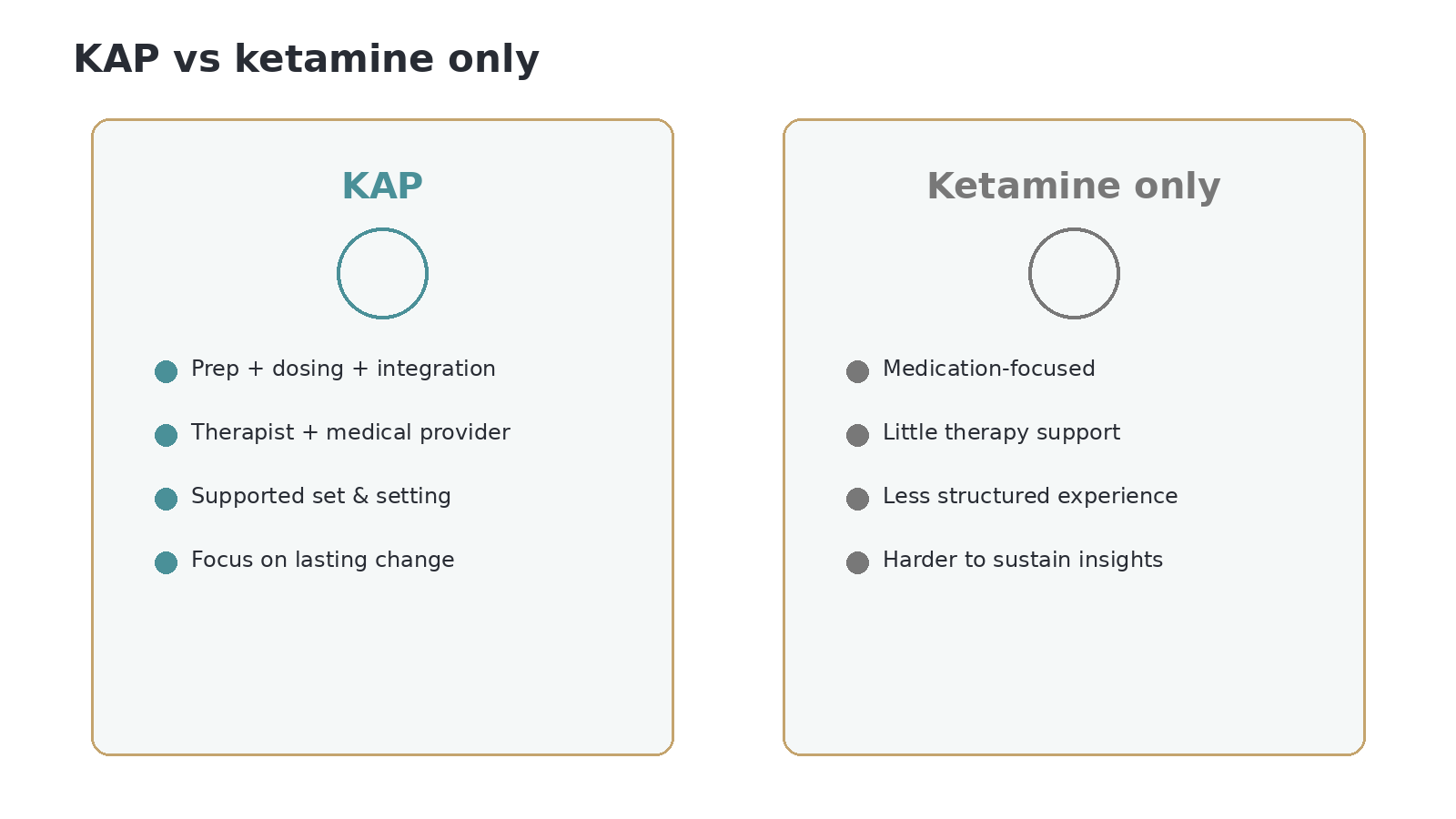
Why pair ketamine with psychotherapy?
Ketamine can open a window of neuroplasticity. Psychotherapy helps you use that window with intention — preparation, supported dosing, and integration — so insights become lasting change. Ketamine alone may relieve symptoms short-term; KAP adds the therapeutic relationship and meaning-making.